Wednesday, March 08, 2006


State Dept Report: Antigay Abuses in Iran, Jamaica, Poland, UAE

The U.S. State Department has posted the entire 2005 annual human rights report on the web and I am slowly going over the report, looking for what's included and/or missing on gay rights and problems for people with HIV/AIDS around the globe.

Follow this link to the index for the report.

So far, I've found that the reports for four countries where abuses of gays and people with HIV/AIDS were widely reported in the news; Iran, Jamaica, Poland, United Arab Emirates, mention the violations. Here are the pertinent excerpts from those countries' reports:

Iran Section

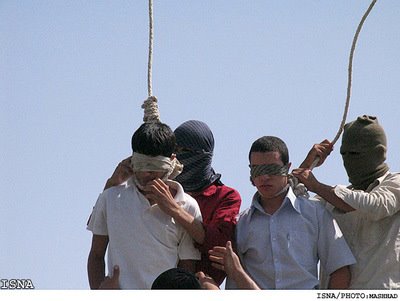
In January government officials told the UN Committee on the Rights of the Child that for many years there had been a moratorium in place on the death penalty for minors under 18. The same day, however, a man was executed for a crime committed when he was 17, and credible reports corroborated such action. AI cited a domestic press report that at least 30 minors sentenced to death were detained in juvenile detention centers in Tehran and Rajai'i Shahr. It was widely reported in the press that 2 teenage boys were hanged in public on July 19 in Mashhad, charged with raping a 13-year-old boy. Their ages differed in press reports, but apparently at least one was a minor at the time of the offense. In this case, some international observers claimed the two were executed for homosexual behavior; however, it was not possible to verify this allegation (see section 5).

In October 2004 20 local human rights groups called on the judiciary not to sentence minors to death. Nobel Peace Prize laureate Shirin Ebadi called for a demonstration, but the authorities denied the request. During the year the UNGA adopted a resolution denouncing the country's practice of executing minors, and the UN Committee on the Rights of the Child urged the country to suspend execution of juvenile offenders. [...]

The law prohibits and punishes homosexuality; sodomy between consenting adults is a capital crime. The punishment of a non-Muslim homosexual is harsher if the homosexual's partner is Muslim. In July two teenage boys, one 16 and one 18 years of age, were publicly executed; they were charged with raping a 13-year-old boy. A number of groups outside the country alleged the two were executed for homosexuality; however, because of the lack of transparency in the court system, there was no concrete information (see section 1.c.). In November domestic conservative press reported that two men in their twenties were hanged in public for lavat (defined as sexual acts between men). The article also said they had a criminal past, including kidnapping and rape. It was not possible to judge whether these men were executed for homosexuality or other crimes.

According to the Paris-based International Federation of Human Rights, the justice system did not actively investigate charges of homosexuality. There were known meeting places for homosexuals, and there had been no recent reports of homosexuals executed. However, the group acknowledged it was possible that a case against a homosexual could be pursued. Conversely, the London-based homosexual rights group OutRage! claimed over four thousand homosexuals had been executed in the country since the Islamic revolution in 1979. A September 29 Western newspaper gave one man's account of a systematic effort by security agents and basiji to use Internet sites to entrap homosexuals.

According to health ministry statistics, by year's end there were 12,556 registered HIV-positive persons in the country, mostly men, but unofficial estimates were much higher. Transmission was primarily through shared needles by drug users, and a recent study showed shared injection inside prison to be a particular risk factor. There was a free anonymous testing clinic in Tehran, government-sponsored low-cost or free methadone treatment, including in prisons. The government supported programs for AIDS awareness and did not interfere with private HIV-related NGOs. Contraceptives were available at health centers as well in pharmacies. Nevertheless, persons infected with HIV were discriminated against in schools and workplaces.

-

Jamaica Section

The Offenses against the Person Act prohibits "acts of gross indecency" (generally interpreted as any kind of physical intimacy) between men, in public or in private, which are punishable by 10 years in prison. Although Prime Minister Patterson stated that the country would not be pressured to change its antihomosexual laws, in October a parliamentary committee proposed a combined national public debate on the legality of homosexuality and prostitution as matters of public health.

The Jamaica Forum for Lesbians, All Sexuals, and Gays (J-FLAG) continued to report allegations of human rights abuses, including police harassment, arbitrary detention, mob attacks, stabbings, harassment of homosexual patients by hospital and prison staff, and targeted shootings of homosexuals. Police often did not investigate such incidents. J-FLAG documented a number of instances of homophobic violence during the year, some of which resulted in charges brought to court, while others were never reported to authorities by reason of fear.

On November 30, Lenford "Steve" Harvey, who operated Jamaican AIDS Support for Life, was killed on the eve of World AIDS Day. At least four men broke into Harvey's home, stole items, and kidnapped Harvey. Two of Harvey's associates who were in the home at the time reported that they were asked if they were gay; they answered negatively but Harvey did not reply, and the intruders took him from his home. Several hours later he was found shot to death in a rural area some miles from his home. At year's end the police had a number of suspects under investigation. A senior JCF official familiar with the Harvey killing reported that the suspects were also linked to other similar robbery-murders whose victims were apparently heterosexual, and he cautioned against categorizing Harvey's death as a hate crime pending further evidence. The JCF appointed political ombudsman Bishop Herro Blair as an independent civilian monitor to oversee the investigation.

In December a homophobic mob allegedly chased homosexual Nokia Cowen off a pier at Kingston Harbor where he drowned. At year's end the police had not identified any suspects in the killing.

In June 2004 Brian Williamson, a prominent homosexual rights activist and founding member of J-FLAG, was found stabbed to death at his home in Kingston. Human rights groups believed that the brutality of Williamson's death indicated a hate crime, but the JCF maintained that the crime was a robbery. A suspect remained in custody at year's end awaiting trial.

Also in June 2004 a group of armed men, reportedly including famous dancehall artist Mark Myrie, a.k.a. Buju Banton, forced their way into a house in Kingston and beat six men while shouting homophobic insults. Banton plead not guilty to the charges on September 21, and was released on less than $1 thousand (J$50 thousand) bail. The court extended Myrie's bail on September 30 and again on October 19, when the court relaxed its conditions, requiring that he report to his local police station once per week.

Male inmates deemed by prison wardens to be homosexual are held in a separate facility for their protection. The method used for determining their sexual orientation is subjective and not regulated by the prison system, although inmates were said to admit their homosexuality for their own safety. There were numerous reports of violence against homosexual inmates, perpetrated both by the wardens and by other inmates, but few inmates sought recourse through the prison system.

Homosexual men were hesitant to report incidents against them because of fear for their physical wellbeing. Human rights NGOs and government entities agreed that brutality against homosexuals, both by police and private citizens, was widespread in the community.

No laws protected persons living with HIV/AIDS from discrimination. Human rights NGOs reported severe stigma and discrimination against this group. Although health care facilities were prepared to handle patients with HIV/AIDS, health care workers often neglected such patients.

-

Poland Section

Right-wing groups attempted on several occasions to disrupt gay pride marches. In May the mayor of Warsaw, Lech Kaczynski, denied approval of a gay rights parade organized by the Equality Foundation, a consortium of gay-rights groups, stating that he would not allow the promotion of gay culture. Despite the denial, on June 11, gay rights activists held a peaceful equality parade during which they complained about the discrimination they experienced in their everyday lives. Marchers were assaulted with objects such as rocks thrown by antigay demonstrators led by the ultraconservative All Poland's Youth League. In September a Warsaw court ruled that the mayor's refusal to issue a permit for the equality parade was illegal. In December the organizers of the parade filed a claim with the ECHR arguing that the country had violated three articles of the European Convention on Human Rights. The case was pending at year's end.

On November 15, the mayor of Poznan, Ryszard Grobelny, refused to issue a permit for an equality march in that city. The mayor cited security concerns, but the NGO attributed the refusal to social intolerance of the local lesbian, gay, bisexual, and transgender (LGBT) community. On November 20, despite the denial of the permit, several hundred people demonstrated in support of gay rights. The activists were harassed, reportedly by members of the All Poland's Youth League, who threw eggs and rocks and made verbal threats that were both homophobic and anti-Semitic in nature. Sixty-eight of the gay rights activists were arrested by police and interrogated about their participation before being released. Approximately one hundred of the violent counterdemonstrators were asked by police for identification in case police decided to investigate further.

On November 25, AI issued a public statement expressing concern over the local "climate of intolerance" against the LGBT community. The statement also criticized the abolition of the office of the plenipotentiary for equal rights for men and women.

There was discrimination against HIV-positive persons. The national AIDS center reported several minor cases of discrimination against HIV-positive persons in the units supervised and funded by the center. The center intervened when complaints were found to be justified.

-

United Arab Emirates Section

Although both civil law and Shari'a criminalize homosexual activity, in general, reports of discrimination against individuals based on sexual orientation were not widespread. However, on November 23, Abu Dhabi Police arrested 26 allegedly homosexual men--UAE nationals, Arabs, and Asians--who had gathered at an Abu Dhabi hotel for a party. Government officials reportedly said that the men were transferred to the ministry's Social Support Center and would "be given the necessary treatment, from male hormone injections to psychological therapies" after their trial. The Ministry of Interior later disavowed this statement. At year's end the case was not yet resolved. [...]

While citizens who contract HIV are afforded full, continuous, and free health care, noncitizen migrant workers who contract the same disease are denied health care and deported.


Tuesday, March 07, 2006


(Elizabeth, in green, with Mary at her side)


Times (UK): Liz Cheney Aids Dick's Iranian Saber-rattling

Dick Cheney rattled his war-mongering saber on Monday against the Islamic Republic of Iran over its nuclear program, but the U.S. press has thus far failed to note his daughter Elizabeth's role in laying the groundwork for regime change in Iran.

If you want to know Elizabeth Cheney, a top analyst at the U.S. State Department, is helping her father in this effort, you've got to cross the Atlantic Ocean to learn more:

Sunday Times, March 5

THE war in Iraq is her father’s business but Elizabeth Cheney, the American vice-president’s daughter, has been given responsibility for bringing about a different type of regime change in Iran.

Cheney, a 39-year-old mother of four, is a senior official in the State Department, which has often been regarded as hostile territory by Dick Cheney’s White House team. Nonetheless father and daughter agree it would be better for the mullahs’ regime to collapse from within than to be ousted by force.

The question is whether democratic reform can be achieved before Iran becomes a nuclear power. That is the younger Cheney’s job. In the State Department she is referred to as the “freedom agenda co-ordinator” and the “democracy czar” for the broader Middle East. “She’s fantastic and dynamic,” said a colleague.

Her official title is deputy assistant secretary of state for Near Eastern affairs and she is in charge of spending the $85m (£48m) — up from $10m last year — recently allocated to promote democracy in Iran. Much of it will be spent on broadcasting the views of exiles, dissidents and reformers inside Iran.

Cheney is better known to Iranian listeners of Voice of America’s Persian service than she is to Americans, although she publicly backed her sister Mary’s right to privacy when Democrats made an issue of her lesbianism in the 2004 election.

She rarely gives interviews but set out her agenda in a speech to the Foreign Policy Association’s annual dinner last June. Cheney said there was a “direct parallel” between reform movements in the Arab world and Poland’s Solidarity in the 1980s, which lit the “spark of freedom” in the Soviet bloc. [...]


Click here to read Elizabeth Cheney's six-page speech
at the association's dinner last year.

She paints such a rosy picture of democracy supposedly on the march in the Middle East and the advances of women in that part of the world I wonder if she gets her intelligence from the same people who assured us WMDs existed in Iraq.

U.S. State Dept Releases 2005 Human Rights Report on March 8

The State Department will release its latest report on human rights practices and protections tomorrow and I anticipate the report will again be inclusive and comprehensive regarding antigay abuses around the globe.

Unlike in previous years when the press and U.S. gay groups ignored the report's documentation of antigay violations, I'm keeping my fingers crossed that this year will be different. Nothing would please me more than to read news accounts on the latest report mentioning the gay aspects and U.S. gay advocates using the report to aid and assist our brothers and sisters abroad.

Here's an excerpt from the State Department's news release today:
Secretary of State Condoleezza Rice will deliver opening remarks on the release of the State Department’s 2005 Country Reports on Human Rights Practices on Wednesday, March 8, at 11:00 a.m. Under Secretary Paula Dobriansky and Assistant Secretary for Democracy, Human Rights and Labor Barry F. Lowenkron will follow the Secretary’s remarks, and Assistant Secretary Lowenkron will respond to reporters’ questions. This event is on camera and on the record, and will be held in the State Department’s press briefing room (Room 2209).

For background information on earlier reports, click here.

To read the 2005 report, once it's posted on Wednesday, and previous years' report, you will find them here.

Sunday, March 05, 2006

SF DPH: Gay STDs Down, Stable; STR8 Gonorrhea up 51%

As we scrutinize the preliminary STD stats for last year, let's keep in mind that due to reporting delays, the numbers may increase slightly by the time the definitive final STD report for 2005 is released in the summer.

One other factor to be mindful of while analyzing STD rates is the larger picture of HIV, because there has been a drop in HIV infections that began at least 2-3 years ago and Dr. Mitch Katz, head of the S.F. health department on February 14 was quoted in the S.F. Chronicle saying that new HIV transmissions have flattened.

The Dec. 2005 monthly STD report, published a month ago, presents much good data about declining infections for gay men, but there is an alarming rise in heterosexual female gonorrhea cases.

> Summary of Provisional 2005 San Francisco STD Data

> Reported cases of early syphilis (primary, secondary and early latent syphilis) declined 23% between 204 and 2005, the first decrease since syphilis started rapidly increasing in 1999.


Such a tremendous drop should be heralded, especially in the gay community because when we talk about syphilis in San Francisco, we are essentially talking about gay syphilis rates and if gay men in the 25th year of the AIDS crisis are undeniably reducing syphilis infections, public health authorities and private-funded gay health groups should offer positive reinforcement for the behaviors behind the decline.

Unfortunately, the DPH and community-based organizations have not made statements about the drop, nor have they articulated plans to keep the numbers going downward.

> Gonorrhea increased by 11% between 2004 and 2005. As reported previously, this increase disproportionately affected heterosexuals.

This is troubling and outrageous. Troubling because it may reflect DPH policies of ignoring STDs among sexually active heterosexuals because the department is exclusively focused on curbing gay STD infections, and outrageous because the DPH and the Board of Supervisors were asked in 2004, by yours truly, to pay attention and react to the then-rising figures of heterosexual female gonorrhea infections, but they chose not to.

City Hall and DPH workers laughed in May 2004 when I spoke at the Board of Supervisors, giving them copies of DPH's then-most current annual STD report showing a rise in female gonorrhea. While they didn't laugh at the stats, they giggled in embarrassment as I, a gay man, spoke about the need for a "Healthy Vagina" campaign, comparable to the "Health Penis" effort.

Now, more than a year later, without any DPH-funded social marketing campaign educating straight people about gonorrhea and urging them to get tested, we're witnessing a tragic spike in new cases for female.

Let's break away for a moment from the Dec. 2005 preliminary STD report and look at the editorial note about gonorrhea in women in the Jan. 2006 report from DPH.

> In 2005, reflecting an increase seen throughout the Western United States, gonorrhea cases among women in San Francisco rose 51% compared with 2004 (from 234 cases to 353 cases). [...] black women had the largest increase 69% from 93 cases to 157 cases [...], Hispanic women and white women had increases of 39% and 40%, respectively.

> Gonorrhea puts women at increased risk for infertility, pelvic inflammatory disease, chronic pelvic pain, tubal pregnancy (a surgical emergency), and HIV. [...]


A 51% surge of any STD in any community, in my opinion, should be noted by the press, but so far, no reporter has touched this story. Have we become so used to only being concerned about gay male STD rates and health penises that we can't give a damn when women of all races in San Francisco are experiencing frightening increases of vaginal gonorrhea and there isn't a single prevention campaign or group targeting sexually active women at-risk for STDs?

You can be sure, if this 51% spike were happening in the gay community, it'd be front-page news and health experts would be pounding their chests berating gay men for not practicing safe sex rules. Pleas would be issued from local politicians, the Centers for Disease Control and AIDS groups for more money for expanded STD/HIV prevention messages targeting gay men.

But when the increase occurs in the women's community, silence and shrugs of the shoulder are the order of the day from the pols and health officials. Now back to the Dec. 2005 report.

> Chlamydia remained stable between 2004 and 2005.

We like good news about any flat STD rate, don't we?

> Between 2004 and 2005, reported rectal infections increased 9% for rectal chlamydia and 11% for rectal gonorrhea. These increases might be the result of increased rectal screening at Magnet, the gay men's health center.

Since California presently lacks HIV names reporting laws and our HIV stats can at times be unreliable and not totally indicative of actual HIV rates, S.F. DPH leaders over the years have used the male rectal gonorrhea rate as a surrogate marker for HIV infections.

The basically stable gay male gonorrhea figures add further credence to the flattening, possibly declining, HIV infection caseload.

Starting with the 1999 annual STD report, DPH has noted every year that increases in male rectal gonorrhea were due to more testing, not necessarily more unsafe gay anal sex.

Even though the Dec. 2005 preliminary numbers are up, and the DPH is hedging on the reason by using the word "might" when describing what may be the reason for the increase, more tests performed, if you look at the annual reports on this issue, you will find that earlier climbing rates were related to the rising number of tests performed.

You can find those previous annual stats at these links: 1999, 2000, 2001, 2002 and 2003. (Rectal rates are general found on page 71 or 73 of the reports.)

What's the bottom line on all the stats and reports from San Francisco? Except for the rise of female gonorrhea, the city is witnessing a great thing: effective control and prevention of gay STD and HIV rates. However, the disturbing fact remains, DPH and AIDS groups can't bring themselves to acknowledge this positive development, and build on its success. It's almost as if there's something fundamentally wrong or embarrassing about what so many have longed for over the past two-and-a-half decades--containment of infections.

Remember the alarms sounded in June 2000 by DPH, AIDS experts and the media when provisional data for STD and HIV in San Francisco were supposedly at sub-Saharan levels? The experts couldn't wait to call reporters and offer scary quotes, gleefully included in front-page news articles, declaring their fears not just for San Francisco, but indeed for all of America.

Here's what one researcher had to say to the S.F. Chronicle:

> ``This is a harbinger of what is going to happen all over the country,'' warned Tom Coates, director of the University of California at San Francisco AIDS Research Institute. ``What happens in the HIV epidemic usually happens here first.''

Well, if what this AIDS expert applies when the numbers are allegedly on an upswing, it seems to me reasonable to say that if San Francisco's numbers are falling, the same could also be occurring all over the country.

Six years on, with gay infections falling faster than Bush's approval ratings, the silence from DPH, AIDS groups, the CDC and the press, is not only deafening, it's something the gay community should immediately demand an end to.

Friday, March 03, 2006


Dutch Embassy, Press: Gays May Be Deported to Iran

Earlier today I called the Dutch embassy in Washington to ask for a statement regarding the case of Saba Rawi, a gay Iranian seeking asylum in the Netherlands.

Leftist gay journalist Doug Ireland wrote about Rawi's plight for NYC's Gay City News this week, asking readers to take five minutes to call, email or fax the Dutch embassy, which is exactly what I did after reading what Ireland had to say.

In my voice mail message for a spokesperson in the press office, I requested a formal comment, one that I could post to my blog, and the embassy official sent the following statement:

> Dear Mr. Petrelis,

> Thank you for your voice mail message. Regarding the specific case of the asylum application of Mr. Saba Rawi:
> Mr. Rawi is appealing his asylum case. Pending the final decision on his case, no further steps will be taken. It is not clear when this case will be decided upon.

> In general, the Netherlands Minister for Immigration and Integration is considering lifting the current ban on repatriating gay Iranian asylum seekers whose asylum applications have been rejected. She will make a decision after consulting the Dutch Parliament. It is not clear when Parliament will take up this issue. The Parliament is in recess until March 8.

> If you would like further information, please contact the following Ministry of Justice spokespersons:

> Martin Bruinsma, 011-31-70-370-6266
> Maud Bredero, 011-31-70370-6698

> Sincerely,
Carla Bundy
Press officer
Royal Netherlands Embassy


Nice that the embassy responded so quickly to my concerns, right? I'd say so and I sincerely hope I'm one of dozens or possibly hundred of human rights advocates applying pressure on the Dutch to do the right thing and allow gay Iranians to stay in Holland and not be deported back to Iran.

Unfortunately, Doug Ireland now reports this awful news from Dutch sources:

> The most respected daily newspaper in the Netherlands, De Volkskrant, reports on its front page today that the Dutch Immigration Minister has sent a letter to parliament informing the legislators that the conservative Dutch government of right-wing Prime Minister Jan Peter Balkenendehas decided to end the six-month freeze on deportation of gay Iranian refugees from the Islamic Republic of Iran's lethal anti-gay pogrom who live in the Netherlands.

> The revelation of this plan, which the government tried to keep under the radar screen, has already provoked a "big scandal" in parliament, one Dutch reporter informed me late this afternoon. For the details, click on this link.


With the Netherlands about to end the freeze on deporting gays facing death in Iran, it's more important than ever that U.S. gays and our allies contact the Dutch embassy over and over again, on behalf of gay asylum seekers.

If you haven't yet called or emailed the embassy yet, please do so, and, if you've already written the ambassador and his staff, contact them again. The lives of gay Iranians are in jeopardy.

Here's the info you need to contact the embassy:

The Royal Netherlands Embassy
4200 Linnean Avenue NW
Washington, DC 20008

The phone number is 202-244-5300; the fax number is 202-362-3430.

The ambassador can be reached via e-mail at webmaster@netherlands-embassy.org.

SF Chron, AL Paper: Bush Katrina Tape = 9/11 "Pet Goat"

From Frisco to 'Bama, editorial writers really know bad presidential sequels when they see them.

The San Francisco Chronicle
One heckuva warning


> In fact, the grainy video of Bush's response was the most damning portrait of an oblivious commander in chief since, well, this same president continued to methodically read "My Pet Goat" to a Florida elementary school class after being told of the attacks on the World Trade Center buildings on Sept. 11, 2001. [...]

Heckuva job, Bushie
The Anniston Star


> This video may hurt Dubya a lot more than the footage we saw in “Fahrenheit 9/11” of the president reading “My Pet Goat” to schoolchildren while al-Qaida was knocking down skyscrapers in Manhattan.

Thursday, March 02, 2006

Release of State Dept's Human Rights Report & Gays

Number of times the words gay, lesbian, bisexual, homosexual, HIV, AIDS, transvestite, transgender, or sexual appears in the transcripts of the U.S. State Department's special press briefings in the past four years upon the release of its annual human rights report: 0.

As a blogger who has been denied media credentials by the public affairs office, and is in San Francisco, I'm putting out a call to reporters and pundits in DC to make plans to be at State's briefing room on March 8, which is when the 2005 report is expected to be released. Gay journalists must get into the press conference and raise our issues.

Many of us in the gay community over the past year have renewed or developed interest in helping our brothers and sisters abroad who face defamation and death every day. We've expressed outrage at Iran's hanging of gay teenagers, the arrest and threatened medical experiments on gays in the United Arab Emirates, and Polish gays denied the rights to assemble in the streets.

And lots more must be done. We American gays must build on whatever actions we took in 2005 to benefit gays beyond U.S. borders, which is where this human rights report plays a vital role.

The annual State report has been used in some countries by local activists to generate debate in the press about the status of gay persons and also by gay asylum seekers as documentation of the persecutions they must endure if returned to the homophobic country of origin.

Let's all think about how to maximize far-reaching benefits for gays around the globe when the latest human rights report comes out next week.

To familiarize yourself with the gay citations from the 2004 report, which covered dozens of countries, please read the excerpts that I posted to my blog. We'll see how the new report stacks up against the detailed attention to antigay violations in the 2004 version. (Scroll down.)

Attention must be paid to the plight of gays worldwide suffering, and dying, because governments disrespect the human rights protections of sexual minorities, and the comprehensive and influential U.S. human rights report is a great tool for shining a light on the all too often under-reported antigay abuses.

Here are the most recent special briefings held by State when the annual report was released: 2001, 2002, 2003,
2004
.
(What would Mrs. Roosevelt say?)


State Dept Iraq Report:
Human Rights Ministry Post Vacant


Who's in charge of the Iraqi human rights ministry over in Baghdad? Or maybe the question should be, is anyone is charge of that ministry?

A Feb. 15 Associated Press wire story reported the following, which says there is person heading the ministry:

> Iraq's human rights minister said Wednesday that more than 100 Iraqis were tortured last year in a secret prison in Baghdad and she would recommend prosecutions of officials, including judges who did not report the abuses.

> The torture occurred in Interior Ministry buildings, including one in Baghdad's Jadriyah district, said the minister, Nermine Othman.


Then on Feb. 16, the Reuters news service put out a story, quoting someone else as the minister:

> Iraq's Human Rights Minister Zuhair al-Chalabi called on U.S.-led troops to release Iraqi detainees on Thursday after the new footage emerged of abuse at Abu Ghraib, which along with other detention centers holds 14,000 prisoners.


Given the rampant confusion and mess of everything in Iraq, it wouldn't surprise me if there were two ministers for one branch of the transitional government. On the other hand, I don't understand how the two wire services could put out their stories, each quoting someone different as in charge of the human rights ministry.

At the time the stories ran, the U.S. State Department's Iraq Weekly Status Report for that period listed the human rights minister's slot as vacant. Click here, then read page 10, for the government chart.

Since then, the latest Iraq weekly report shows the post is still vacant. Go to this link, and on page 10 you'll find the latest list of ministers, minus the human rights minister.

If it's not too much trouble, I'd like the State Department and the Bush administration to tell me if someone is running the human rights ministry, who that person might be, and if, as the weekly status reports show, no one is in charge of this crucial component of the transitional government, why is it the chair of this ministry is empty.
Capital Times: Rep. Baldwin is Not Married to Her Partner

The Capital Times of Madison, Wisconsin, which defines itself as the state's Progressive Newspaper, today picked up on my posting yesterday about lesbian Rep. Tammy Baldwin's travel expense disclosure form, listing her partner as her spouse.

From writer Doug Moe's column:


> VARIOUS GAY and lesbian blogs and Web sites were buzzing Wednesday about whether U.S. Rep. Tammy Baldwin had married her domestic partner, attorney Lauren Azar.

> She didn't.

> "They are not legally married," Jerilyn Goodman, Baldwin's press secretary, said.

> The buzz was caused by a blog posting Tuesday by San Francisco gay rights advocate Michael Petrelis. Petrelis noted that "on at least one official travel disclosure form" filed with the clerk of the House of Representatives, Baldwin had listed Azar as her "spouse."

> In January, Baldwin went on a trip to Israel paid for by the American Israeli Education Foundation, and Azar accompanied her. [...]

> According to Goodman, the House's travel disclosure form was changed in the middle of 2005. In the past - at least during Baldwin's first 6 years in Congress - the form had provided only two choices: spouse or child. Baldwin, when traveling with Azar, would check spouse.

> The form was changed to include "other," but Baldwin, Goodman said, "saw no reason to change" the way she marked the travel form. [...]


Thanks, Doug Moe, for reporting on Baldwin's marital status, and kudos to Baldwin for filing her disclosure form with her partner listed as a spouse.

Wednesday, March 01, 2006


SF Weekly: Why HIV Rates Are Falling

For a number of years I've demanded the Centers for Disease Control, the S.F. Department of Public Health and HIV prevention groups, particularly the Stop AIDS Project, produce verifiable evidence AIDS prevention social marketing campaigns actually reduce infection rates.

One gay paper, Atlanta's Southern Voice, wrote an excellent article about demands raised in 2003 that federal and local health experts prove HIV prevention messages were effective. The story showed how after more than two decades of campaigns targeting gay men, the CDC and San Francisco officials couldn't just whip out studies validating how the prevention programs were either stabilizing or decreasing infections.

Now, I am so pleased to report, the SF Weekly newspaper today has published a truly fine article about all the social marketing targeting sexually active gay men to engage in safe sex and not transmit HIV, and there's little evidence to show the campaigns have worked to reduce HIV.

Highlights from the article:

> City-funded HIV prevention campaigns have used such "social marketing" methods -- a popular technique that applies commercial marketing principles to social and behavioral issues -- since the late 1980s as a way to persuade gay men to practice safer sex. [...] But a recent article in a local gay newspaper has reignited a strong and long-standing debate over the ads, and the community is once again wondering whether the city needs a new approach to HIV prevention. Besides, new evidence proves that another factor -- tied neither to city programming nor to advertising -- is what's really causing infection rates to drop.

The other factor driving down HIV rates is serosorting, the practice of gay HIV poz men sleeping only with other HIV poz men.

> However, that effort is something of an exception, because the majority of these campaigns still use sex and anger to get their messages across.

This attitude of equating gay sex with anger to deliver a safe sex message reinforces negative beliefs about gay sex that I believe is very harmful to sexually active gays. At times, it's been beyond my comprehension that San Francisco, of all places, has operated under the premise that gays require hostile messages about our sex lives in order to have healthy sex. Need proof of one of the extremely hostile campaigns hitting gay men? Go here.

> As is the case with all advertising, it's difficult to measure a campaign's direct impact. Better World Advertising claims that 70 percent of gay men in the city "like or strongly like" the "HIV Stops With Me" effort, according to a 123-person survey it conducted in 2003. The S.F. Department of Public Health has never retained an independent firm to analyze the effectiveness of its ad campaigns.

It's not shocking to me to finally read in print that the local health department has never bothered to spend money evaluating whether its bombardment of gay men with campaigns is working. Why analyze the effectiveness of HIV prevention when millions of dollars, and hundreds, maybe thousands of jobs depend on coming with new campaigns, regardless of their impact on stats? You'd think twenty-five years into the AIDS epidemic the city of San Francisco the basic idea of proving effectiveness of prevention would have been addressed, right? Guess again.

> For many gay men and activists, frustration with the tone of recent HIV prevention messages is rising. When SF Weekly interviewed more than two dozen gay men in and around the Castro District last week, only one man said he liked and was affected by "HIV Stops With Me." Comments about other HIV ad campaigns in the city were equally negative, the impression being that the messages of prevention and testing are often lost amid sexy models and harsh slogans.

Let's hope the HIV experts pay attention to this rising frustration and the way safe sex messages are getting lost.

> Some men express confusion at the idea of using fear or sex to spread messages of safety, trust, and communication; others have chosen to ignore the ads altogether.

> When Castro resident James Serrano, 27, was asked about the effectiveness of HIV marketing campaigns, he replied, "Don't ask me. I haven't paid attention to that shit for years."


Yep, after so many years of angry, gay sex negative HIV prevention campaigns, younger gays are tuning out the message. You can bet the HIV prevention groups here are probably thinking of even more hostile fear-driven messages to reach the audience already blocking out the safe sex messages.

> Despite the controversy over social marketing, San Francisco does have reason to celebrate. New evidence shows that HIV infection rates are dropping, but not because of any ad campaign or city-funded program.

The SF Weekly speaks some unvarnished truth that has been denied for too long!

> Mounting data now suggests that "serosorting" -- the practice by which gay men choose to have sex only with those who share their HIV status -- might be primarily responsible for the decrease in new infections. [...]

> But neither the city nor the AIDS Foundation has endorsed or sponsored any programming or advertising about serosorting. This successful technique has emerged from within the gay community itself without any sexy models or punchy slogans to urge it on.


So HIV rates fall in America's AIDS Model City, not because of government or nonprofit social marketing campaigns, but because of gay men devising our own methods of averting transmission that had nothing to do with the official prevention messages!

Maybe it's time for the folks pushing the angry, ineffective HIV prevention campaigns to give us a break from their alarmism.

If you want to read what one gay youth, Trevor Hoppe, wrote a few weeks back in the Bay Area Reporter about what's wrong with HIV prevention, go here. Hoppe raises many issues that must be address by gay men, not just in San Francisco, but across the country.